
Agent interface / version 0.4
One scene.
Any Agent.
A portable, validated JSON scene drives both the website and the local command-line renderer. Edit words and colors, then generate an SVG without uploading your materials.
1 / Get the renderer
Download the standalone CLI bundle and unzip it on a computer with Node.js 20 or newer. It uses only Node.js built-ins; no login or external services.
curl -fsSLO https://makeasciiart.com/downloads/recursive-art-cli-v0.4.zip
unzip recursive-art-cli-v0.4.zip -d recursive-art
cd recursive-art
node recursive-art.mjs validate story.json
Machine-readable resources: capability manifest, text-only schema v1, mixed-media schema v2, and text-only example, mixed media example, stylized portrait, Ada Lovelace historical study, and Jensen Huang → NVIDIA → GeForce study.
2 / Customize a scene
Edit the bundled story.json. The scene contains a large character, an inner word, a smaller word, the text that fills them, colors and a deterministic seed. For mixed scenes, use the bundled mixed.json and schema v2: groups can contain text, vector shapes, embedded images, and illustrative data bars. Nested elements use local parent coordinates, with capped depth and total nodes.
{
  "version": 1,
  "title": "Inside a Story",
  "seed": 23,
  "macro": "S",
  "focus": "STORY",
  "detail": "IDEA",
  "words": ["FORM", "LIGHT", "STORY", "CREATE"],
  "microWords": ["A BEGINNING", "A SMALL IDEA"],
  "colors": {
    "background": "#080d13",
    "ink": "#e9ede8",
    "accent": "#d3a76d"
  },
  "width": 1000,
  "height": 1000
}
3 / Render and inspect
node recursive-art.mjs inspect story.json
node recursive-art.mjs render story.json artwork.svg --stop=0
node recursive-art.mjs render story.json closeup.svg --stop=2
node recursive-art.mjs validate mixed.json
node recursive-art.mjs render mixed.json layered.svg --stop=2
node recursive-art.mjs inspect portrait.json
Commands emit machine-readable JSON on stdout and structured errors on stderr with a non-zero exit code. --stop selects one of three prepared camera targets. Each output is an actual self-contained SVG with nested text geometry.
4 / Read two sourced biographies
Use the included historical and commercial figure scenes as reference inputs, not as generic facts about other people. Each JSON records Wikipedia pages and Wikimedia Commons photo licensing. You can render the three-level Ada scene or the four-level Jensen scene. The SVG contains real text; source links are also available in the web studio.
node recursive-art.mjs inspect wiki-ada-lovelace.json
node recursive-art.mjs render wiki-ada-lovelace.json ada.svg --stop=2
node recursive-art.mjs inspect wiki-jensen-huang.json
node recursive-art.mjs render wiki-jensen-huang.json geforce.svg --stop=3
Image provenance: Ada Lovelace's 1836 portrait by Margaret Sarah Carpenter is marked public domain on Wikimedia Commons. Jensen Huang's 2024 photograph by Peter Dasilva / European Union is CC BY 4.0; credit the photographer, source, license and derivative transformation. Neither NVIDIA nor GeForce endorses the artwork.
5 / Turn your image into characters
The CLI can sample a locally stored portrait or other image into a glyphField scene. Try our original sample portrait first. This step requires FFmpeg installed on your computer; the source is never uploaded.
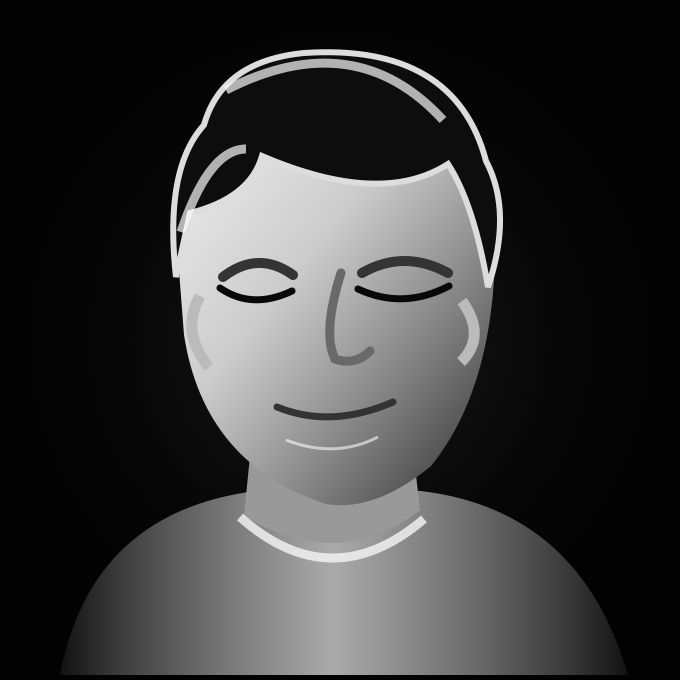
node recursive-art.mjs sample portrait.json my-photo.png my-portrait.json
node recursive-art.mjs render my-portrait.json portrait.svg --stop=0
6 / Export a zoom video (macOS)
On macOS, install FFmpeg with the libx264 encoder; the built-in sips tool turns frames from the shared SVG renderer into PNG. The CLI then encodes an MP4. The film uses the same scene and camera stops as the web viewer, with a deterministic log-scale zoom path. Watch a real 3-second sample MP4.
node recursive-art.mjs animate my-portrait.json portrait.mp4 --duration=3 --fps=12 --size=640
Limits: 2–8 seconds, 8–24fps, and even dimensions of 400–1080px. The CLI uses local binaries, not a paid API. Video encoding is not offered in the browser or on non-macOS platforms in this release.
Call it from your Agent
Ask your local coding Agent to read the Agent contract, download this bundle, modify the example with your own words and render the SVG. The Agent should preserve the schema, check content sources and keep private materials on your device.
“Create a sourced recursive character composition with clear camera stops. Use my provided text and colors, validate the JSON scene, and generate an SVG at each zoom stop. Don't invent facts or upload my materials.”
Current boundaries
The v2 renderer supports images embedded in scene JSON, groups, text, shapes and sample data, with bounded nesting and camera stops. It does not support live remote image URLs, true 3D scenes, remote HTTP rendering, persistent projects or hosted videos. PNG export and an interactive zoom tour are available in the web studio. The local CLI now exports SVG and macOS MP4. PNG export remains available in the web studio.
Create a scene in the browser